Disclosure: This post contains affiliate links. If you purchase through these links, I may earn a small commission at no extra cost to you. I only recommend gear I've personally tested in the field. Learn more
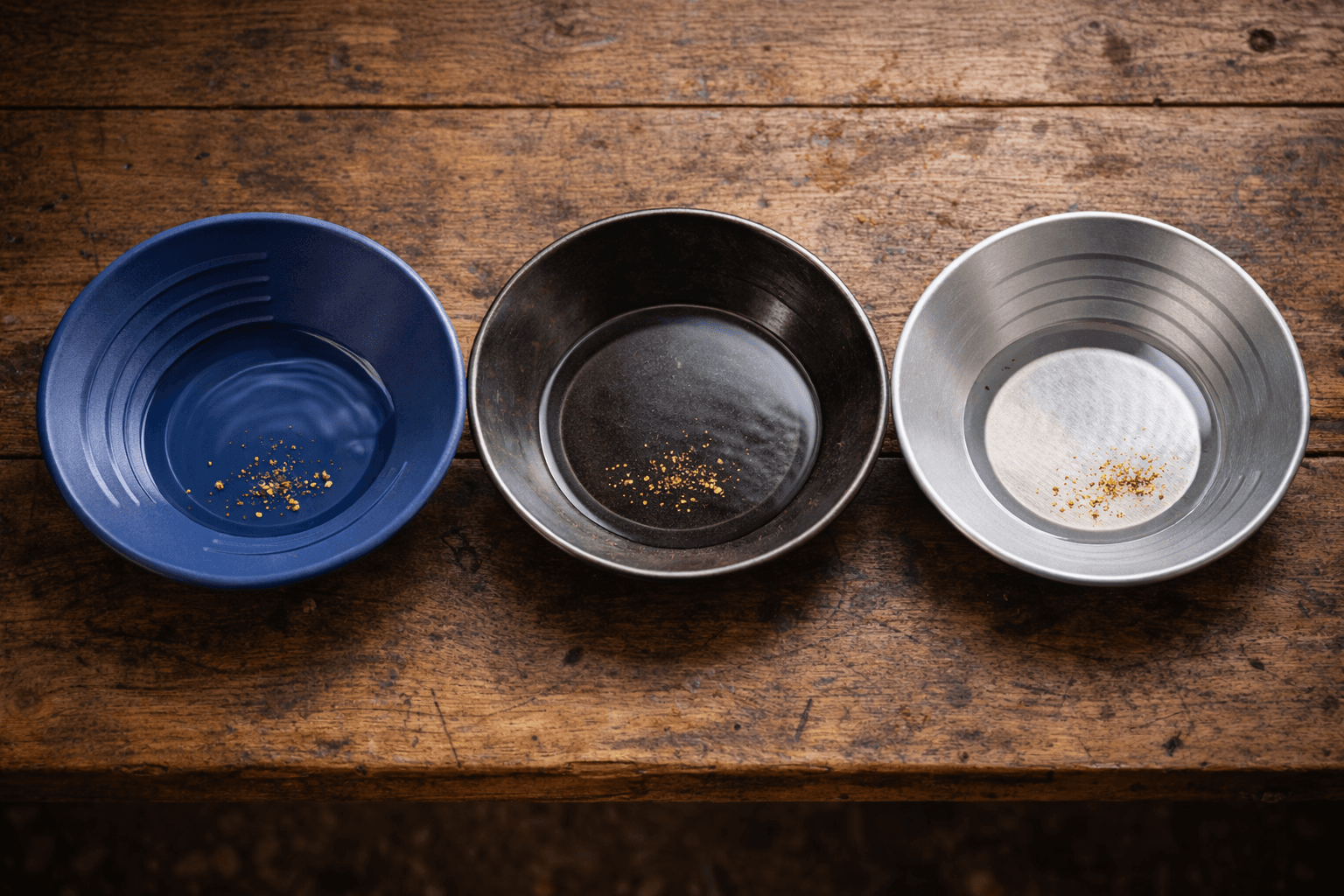
Which gold pan material is best? Jake Lawson compares plastic, steel, and aluminum pans to help you choose the right one for your prospecting style.
# Gold Pan Comparison: Plastic vs Steel vs Aluminum
One of the first questions new prospectors ask me: "What kind of pan should I buy?" It's a fair question—there are a lot of options out there, and they all claim to be the best. Let me break down what actually matters.
Plastic Gold Pans
Price range: -25
Pros
- Lightweight and won't fatigue your arms
- Usually green or blue for high contrast with gold
- Riffles molded right in
- Won't rust, ever
- Affordable enough to own multiple sizes
Cons
- Can crack in extreme cold
- Some cheap ones warp over time
- Not quite as "traditional" if that matters to you
My take
Plastic pans are what I recommend to 90% of beginners. The color contrast makes it much easier to spot gold, and the weight savings add up over a long day of panning. Most of my working pans are plastic.
Steel Gold Pans
Price range: 5-35
Pros
- Traditional look and feel
- Nearly indestructible
- Great heat distribution if you're fire-treating
- Heavier weight can help with technique
Cons
- Will rust if not dried properly
- Heavier = tired arms faster
- Need to be "seasoned" before first use
- Silver color makes spotting gold harder
My take
Steel pans are for traditionalists and experienced panners. If you grew up watching your grandfather use one, there's something satisfying about the heft and feel. But for pure efficiency? Plastic wins.
Aluminum Gold Pans
Price range: 2-30
Pros
- Lighter than steel
- Won't rust like steel
- Some have powder coating for better contrast
- Durable construction
Cons
- Can dent if dropped on rocks
- Plain aluminum offers poor gold visibility
- Less common, fewer options
My take
Aluminum is the middle ground nobody asked for. Not as light as plastic, not as sturdy as steel. I own one aluminum pan and barely use it.
What About Riffle Design?
Honestly, riffle design matters more than material. Look for:
- Dual-drop riffles for catching fine gold
- Smooth transitions so material flows properly
- Deep enough riffles to trap gold without clogging
A good plastic pan with great riffles beats a steel pan with poor riffles every time.
My Recommendation
For beginners: Start with a quality 14" green or blue plastic pan. Spend 5-20 on something with good riffles. Don't overthink it.
For experienced panners: Use whatever feels right. You've developed your technique around your preferred pan. Stick with what works.
For collectors/traditionalists: Get a nice steel pan for display and photos, but use plastic for actual prospecting.
Size Matters Too
- 10" pans - Good for final cleanup and kids
- 14" pans - The goldilocks zone for most prospecting
- 17" pans - For processing larger volumes
Start with a 14". Trust me.
Happy panning,
— Jake
Tags
Related Articles
Best Metal Detectors for Gold Under $1,000 (2026 Buyer's Guide)
Discover the best metal detectors for finding gold nuggets under $1,000. Jake Lawson reviews the Minelab Gold Monster 1000, Fisher Gold Bug 2, Garrett AT Gold, and more with honest pros, cons, and buying advice.
Gear ReviewsMetal Detectors for Gold Nuggets 2026: PI vs VLF Explained
Every year I get asked what detector to buy for gold nuggets. After testing dozens of machines in real goldfields, here's my breakdown of PI vs VLF.