Off-Grid Power for Gold Prospecting & Mining Claims
Most good ground has no shore power for miles. Every hour of detecting, every highbanker pump run, and every night of camp light comes out of a battery you carried in — so the real question isn’t which brand to buy, it’s how many watt-hours your way of prospecting actually burns. This page groups our current power lineup by trip length, the same way we size setups in Ten Years Powering a Claim, Jake’s account of going from wet lead-acid cells to AGM to lithium on working claims.
Two honest notes before the gear: a pump is the item that decides your battery size — everything else (detectors, phones, GPS, lights) is a rounding error next to moving water. And lithium (LiFePO4) has effectively ended the lead-acid era for this use: it’s lighter per usable watt-hour, tolerates partial charge, and survives the truck-bed life that killed wet cells.
Day trips: detectors, phones, and lights
For a single day on the claim you don't need a generator — you need reliable charging. A compact station in the 300Wh class tops off detector batteries, phones, and a GPS several times over and runs an LED light through the evening. What it won't do is run a pump; if you're moving water, start a tier up.

Weekend camps: short pump runs and overnight lights
Around 1kWh with a real inverter covers a weekend at a dispersed site: intermittent 12V pump bursts, camp lighting all night, and every battery in the group recharged. Sodium-ion chemistry is worth a look here — it tolerates cold mornings at elevation better than standard lithium, which matters if you work ground that frosts.

Multi-day basecamps: run the pump like you mean it
This is the tier where a highbanker or recirculating sluice becomes practical: 2–5kWh banks that carry a 12V pump through working days, keep lighting on continuously, and absorb solar input while you dig. Sizing honestly matters more than brand — the pump's draw multiplied by real hours decides everything, and our power guide walks the arithmetic.

BLUETTI AC200L Portable Power Station
With 2,048Wh of capacity and a 2,400W inverter, the AC200L can run a 12V pump for a highbanker or sluice intermittently across several days, keep LED camp lighting on every night, and charge detectors, phones, and a GPS without rationing power. It's a reasonable anchor unit for a dispersed camp with no shore power for 3-4 days.

BLUETTI Elite 300 Portable Power Station
Bluetti markets the Elite 300 as its smallest 3kWh-class unit, packing roughly 3,014Wh into a still-portable case with a 2,400W inverter. That's enough to run a 12V highbanker pump through a working day, keep camp lights on overnight, and charge multiple detectors and phones without watching the percentage. Bluetti's code ELITE300AFF is good for 8% off the Elite 300 and its bundles.

BLUETTI Elite 400 Portable Power Station
The Elite 400 steps up to about 3,840Wh with a 2,600W inverter, built for a claim camp that runs for the better part of a week between resupply trips. It can carry a 12V pump for longer stretches, run camp lighting continuously, and charge a full set of detectors, phones, and GPS units with room to spare. Bluetti's code ELITE400AFF takes 6% off the Elite 400 and its bundles.

Jackery Solar Generator 3000 Pro
Jackery's Solar Generator 3000 Pro holds about 3,024Wh and puts out up to 3,000W, enough to run a 12V pump for a highbanker or sluice through most of a working day, keep lights on overnight, and charge detectors, phones, and GPS units for a multi-day stay. Jackery quotes a full solar recharge in 3-4 hours, which matters when the nearest outlet is a two-hour drive away.

HomePower 3000 Solar Generator
The HomePower 3000 offers roughly 3,072Wh of capacity and a 3,600W output, giving a multi-day camp enough power to run a 12V pump intermittently, keep lighting on through the night, and charge every detector, phone, and GPS unit in the group without rationing.

Solar Generator 5000 Plus
At about 5,040Wh with up to 7,200W of output, the Solar Generator 5000 Plus is sized for a longer stay or a shared camp: it can run a 12V pump for extended periods, power lighting across multiple tents, and keep several detectors, phones, and GPS units charged at once without dipping low.

BLUETTI Elite 200 V2 Portable Power Station
The Elite 200 V2 holds roughly 2,074Wh and outputs up to 2,600W, giving a multi-day camp enough headroom to run a 12V water pump on and off, power string lights or a lantern all night, and keep detector batteries, phones, and GPS units topped off. It recharges quickly on shore power before a trip and is compact enough to load in a truck bed alongside the rest of the gear. Bluetti's code AFFEV5% takes 5% off the Elite 200 V2 at checkout.
Charging infrastructure: solar and alternator input
A battery you can't refill is a countdown timer. Alternator DC-DC charging refills a station from the truck on the drive between sites, and permanent-style solar systems suit a claim you return to all season.
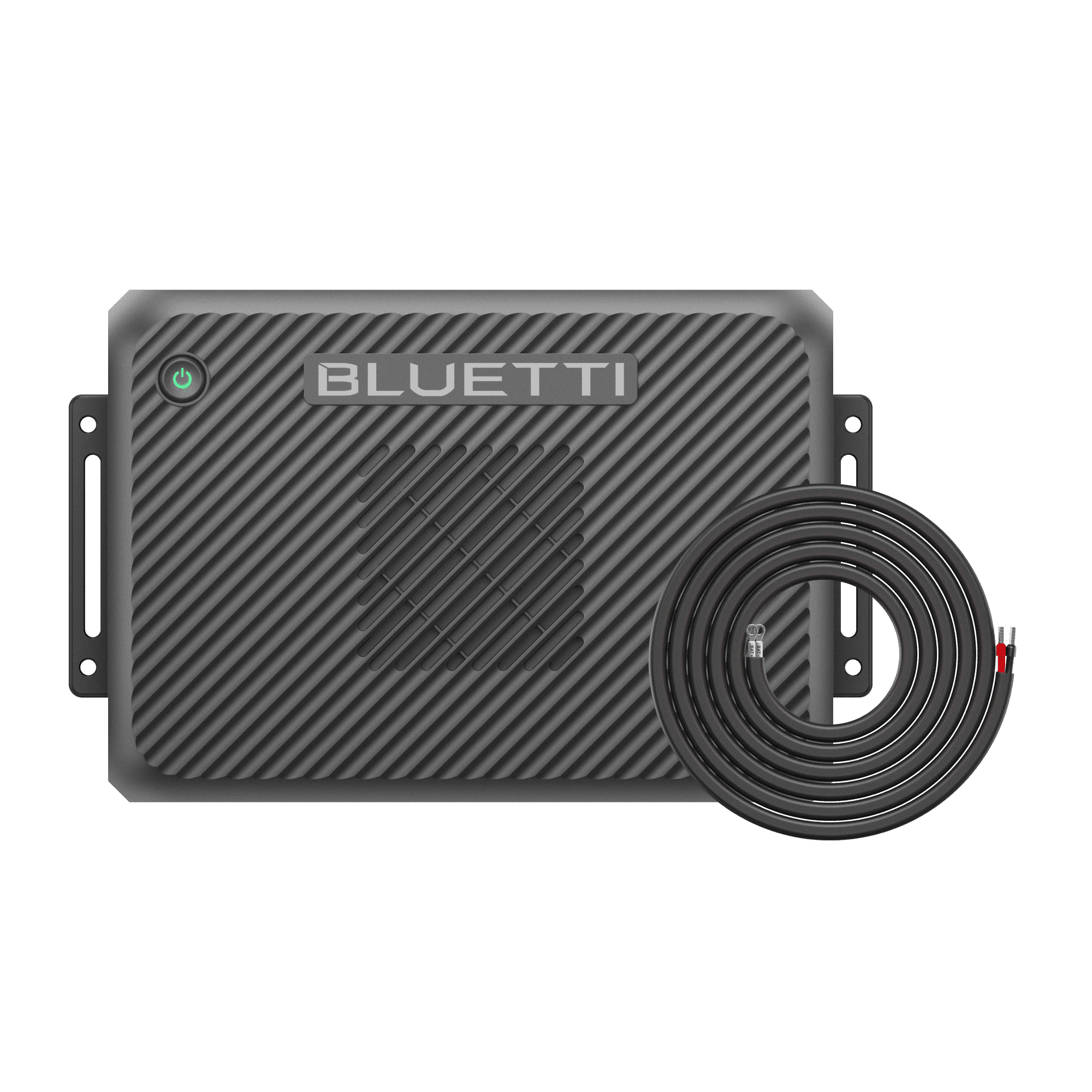
BLUETTI Charger 2 | 1200W Alternator & Solar Dual DC Charger
The BLUETTI Charger 2 isn't a battery — it's a dual DC charger that pulls up to 800W from a vehicle alternator and up to 600W from solar panels at the same time, feeding a compatible Bluetti power station while you drive to or from the claim. For a camp that depends on a truck or off-road vehicle, it turns drive time into charge time instead of idling at a wall outlet.

BLUETTI RV5 | 5kW RV Solar Power System
The BLUETTI RV5 is a 5kW all-in-one solar power system built around a 51.2V/100Ah (roughly 5,120Wh) LiFePO4 battery, with the option to add a second battery for double the capacity. For a claim worked from a truck, van, or trailer rather than a backpack, it can run a 12V pump continuously, power camp lighting through the night, and keep every detector, phone, and GPS unit charged, while recharging itself from solar panels, an alternator, or shore power. Bluetti's code RVAFF6 takes 6% off the RV5 and its bundles.
Size it before you buy it
The arithmetic is short: list what you’ll run, multiply each item’s draw by honest daily hours, add 30% headroom for cold and battery age, and buy the tier that covers the number — not the tier the marketing photo shows. The pump sizing guide works the numbers for an 1100 GPH highbanker pump, and the full decade-long story — wet cells to AGM to lithium — is in the off-grid power guide.
Setting up water for the first time? The sluice box setup guide covers the recovery side of the same camp.

From the Workbench Library
Liberating Precious Metals
The workbench reference for recovering gold, silver & platinum — keep the paperback open next to your furnace.